

Written by Aoife Sherry - Programmes Communications Intern with contributions from Andrea Finnegan, Programme Manager for Humanitarian and Emergency Affairs.
From the team
World Vision believes a world without hunger is possible. Nutritious food does more than fill empty stomachs, it saves lives, strengthens health, and keeps children in school. Every day, we work towards creating a world where no child goes to bed hungry.
But we cannot do this alone.
For more than 30 years, World Vision and the World Food Programme have stood side by side in the fight against hunger. WFP is the world’s leading humanitarian organisation tackling global hunger, and together, our partnership has transformed millions of lives across more than 33 countries.

In 2024, 194 joint projects reached 11.9 million people, including 7 million children. This scale is only possible because of a partnership built on trust, expertise, and a shared commitment to helping the world’s most vulnerable.
Since 2005, World Vision has been WFP’s largest nongovernmental partner, delivering high-quality, child centred programmes in some of the world’s most fragile and hard to reach places. As an enabling partner of choice, we help WFP design sustainable solutions that strengthen nutrition, health, education, and longterm food security.
From remote villages effected by drought, to communities devastated by conflict, our collaboration brings hope in many forms. We help to provide warm, nutritious school lunches, lifesaving food for malnourished children, and tools and trainings that help families prepare for future crises.
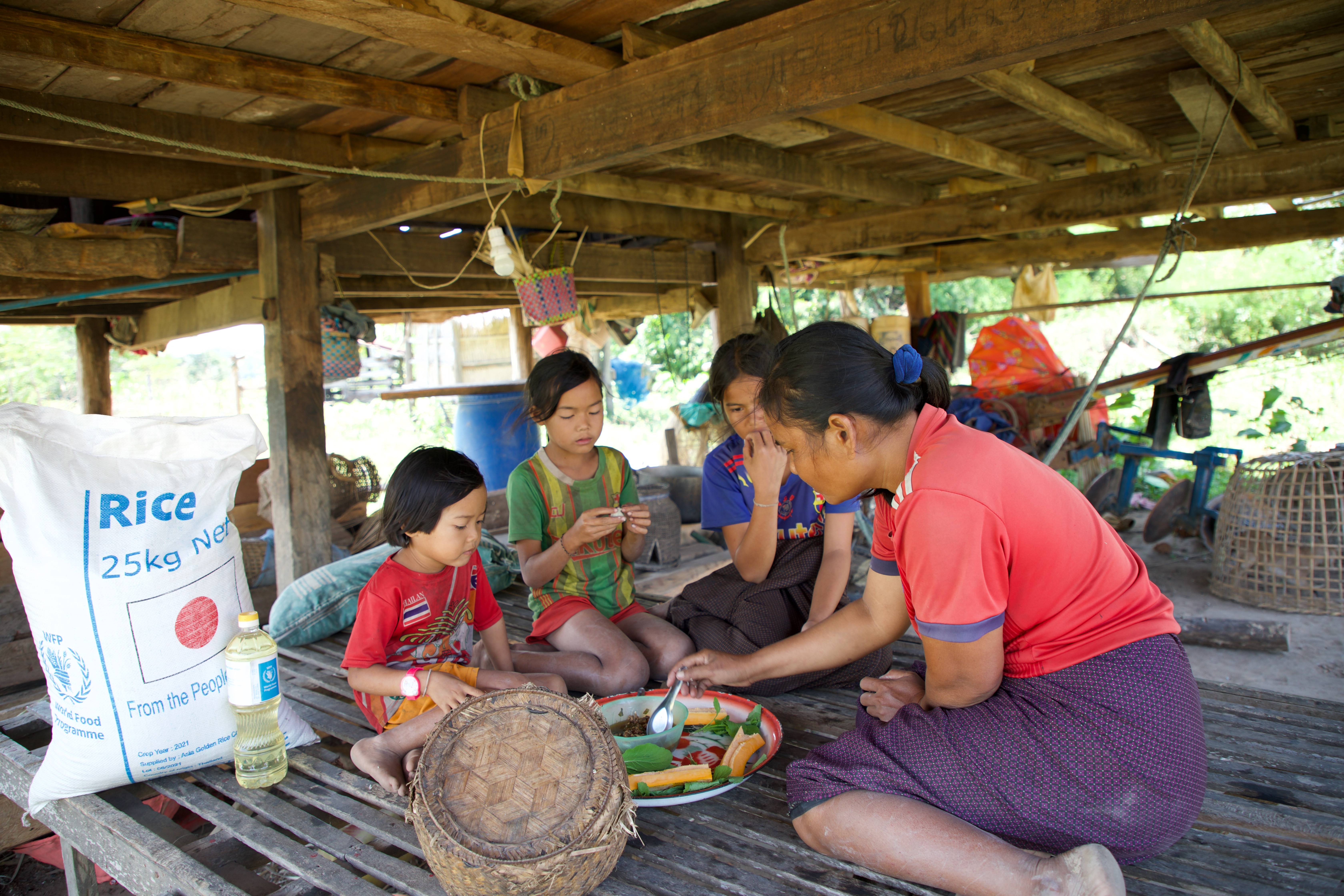

Ireland’s Role in Promoting Food Security
World Vision Ireland plays a crucial role in this global partnership. In 2025, we worked with WFP to deliver life-saving assistance in the Democratic Republic of Congo, Sudan, South Sudan, Uganda, Sierra Leone, Afghanistan, and Tanzania.
These projects helped hundreds of thousands of children, women, and men, overcome hunger and avoid harmful coping strategies such as skipping meals, or pulling children out of school.

Fighting Hunger in Afghanistan
In the provinces of Badghis and Ghor, hunger has become a daily reality. Years of drought, failed harvests, and the accelerating impacts of climate change mean families struggle daily to find enough food to eat. 9.5 million people across Afghanistan are facing severe food insecurity. 4.6 million mothers and children are experiencing malnutrition.
One in five people in Afghanistan relies on humanitarian aid simply to survive. But in Badghis and Ghor, the situation is even more dire. Here, 80% of families depend on agriculture and livestock, yet the land can no longer sustain them. Repeated droughts have dried up water sources, decimated crops, and weakened livestock. Entire communities have been forced to migrate in search of food, income, or safety. Many households are skipping meals, taking children out of school, or selling essential assets just to get by.
Between September 2024 and August 2025, World Vision Ireland launched a targeted emergency response. In partnership with the World Food Programme, families received unconditional food packages to meet their immediate nutritional needs, as well as cash transfers to buy food that matched their dietary needs and preferences.
This approached helped to stabilise households, reduce dependency on aid, and strengthen long term resilience.
Thanks to the strong partnership between World Vision Ireland and WFP, the project reached an extraordinary number of people. We were able to support 67,573 households, or more than 473,000 people, in accessing nutritious food.1

A Shared Commitment to Ending Hunger
While the challenges in Afghanistan remain immense, the partnership between WFP and World Vision demonstrates what is possible when humanitarian action is timely, targeted, and rooted in dignity. In Badghis and Ghor, hundreds of thousands of people have been given food, as well as a chance to rebuild their lives.
Our partnership with WFP allows us to reach hundreds of thousands of people across the globe in similar programmes. As long as hunger threatens children and communities around the world, World Vision and WFP will continue standing together to fight it.
Footnotes
1 From End of Project Report – A223255