


Written by Maurice Sadlier
World Vision Ireland’s Director of Programmes and Policy.
Over the years, I have attended global summits, policy forums, and international meetings where children and young people have been invited to share their experiences with those shaping the decisions that affect their futures. Each time, I have been struck by the power of their insights, their honesty, and their ability to challenge assumptions in ways that adults often cannot.
Those experiences have also left me with an increasingly uncomfortable question. Are we creating meaningful opportunities for children to influence decisions that impact their lives, or are we simply giving them a platform to speak? And perhaps more importantly, when children do speak, how often do their perspectives shape the policies, commitments and investments that
Participation was the first step
For decades, World Vision has worked alongside children and young people to ensure their voices are heard in decisions that affect their lives. Through our programmes, we have helped children build confidence, strengthen leadership skills, understand their rights, and engage meaningfully with decision-makers. We have also championed their inclusion in consultations, policy processes, and international forums.
This work has mattered. It has helped move child participation from the margins towards the mainstream. Across communities, national processes, and global platforms, there is now far greater recognition that children have both the right and the capacity to contribute to decisions that affect their lives.
Recently, I had the opportunity to reflect on this progress at the Listening to Children and Young People: Challenges in Challenging Settings conference, organised by Ireland's Department of Children, Disability and Equality as part of the Irish Presidency of the Council of the European Union. Sharing these advances was rewarding and encouraging. But the question increasingly occupying my mind is this: what happens after children have spoken?
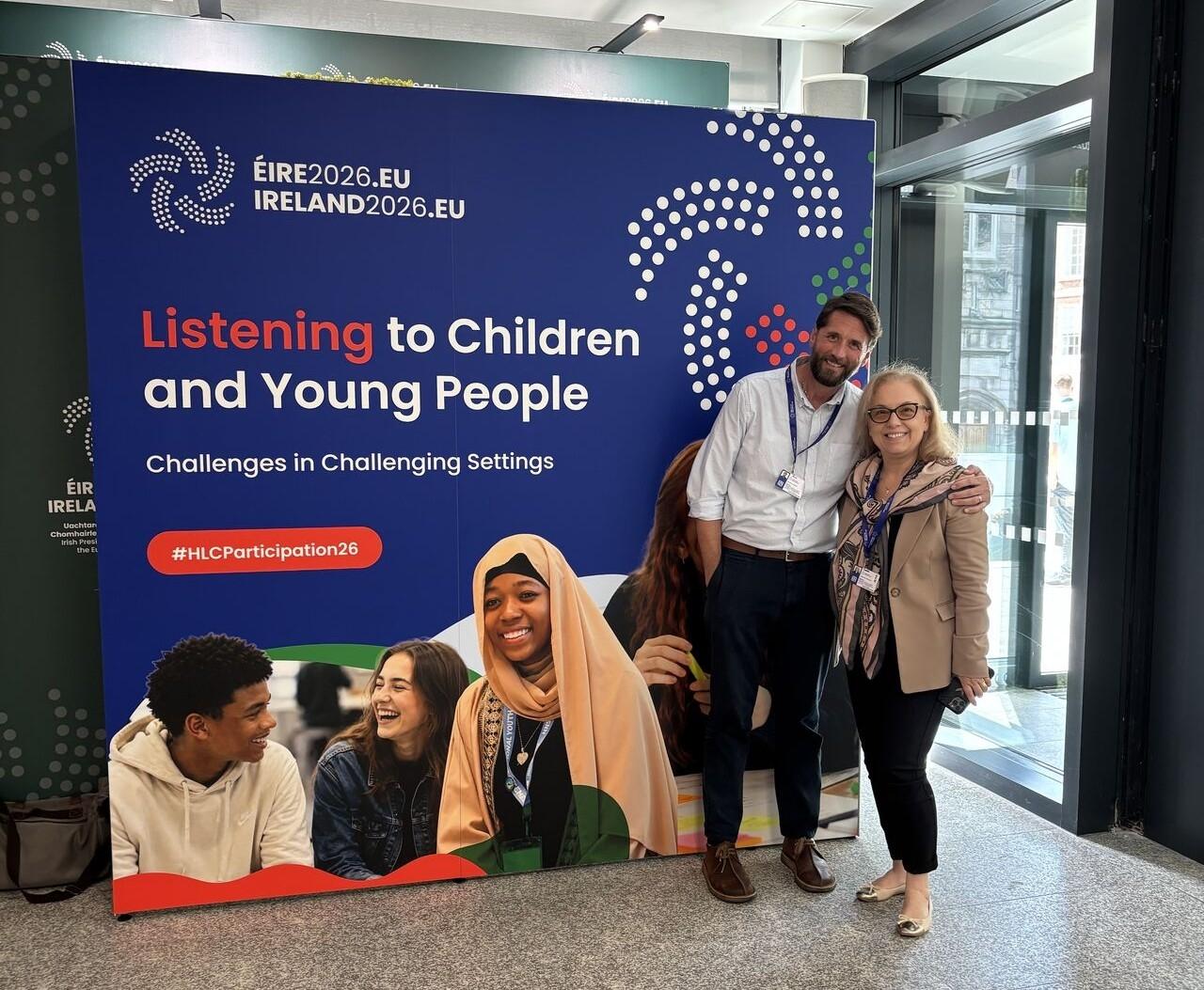
Maurice Sadlier and Loredana Giuglea at the Irish Presidency of the Council of the EU 2026 High-Level Conference on Listening to Children and Young People.
From participation to influence
At COP30 in Belém, Brazil, I accompanied 13-year-old Lynthia, a youth advocate from Solomon Islands, as she joined government representatives, experts, and community leaders to discuss climate change. She spoke with quiet conviction about what environmental change means for children in her community and shared a simple hope:
"My hope the sun shines brightly that the land is greener the sea is fun... My hope is to make our mother earth smile. Together children and youth want to protect our planet from climate change."
For many, that would have been the story. A young person speaking on a global stage. Another example of participation working as intended. For me, the defining moment happened elsewhere.
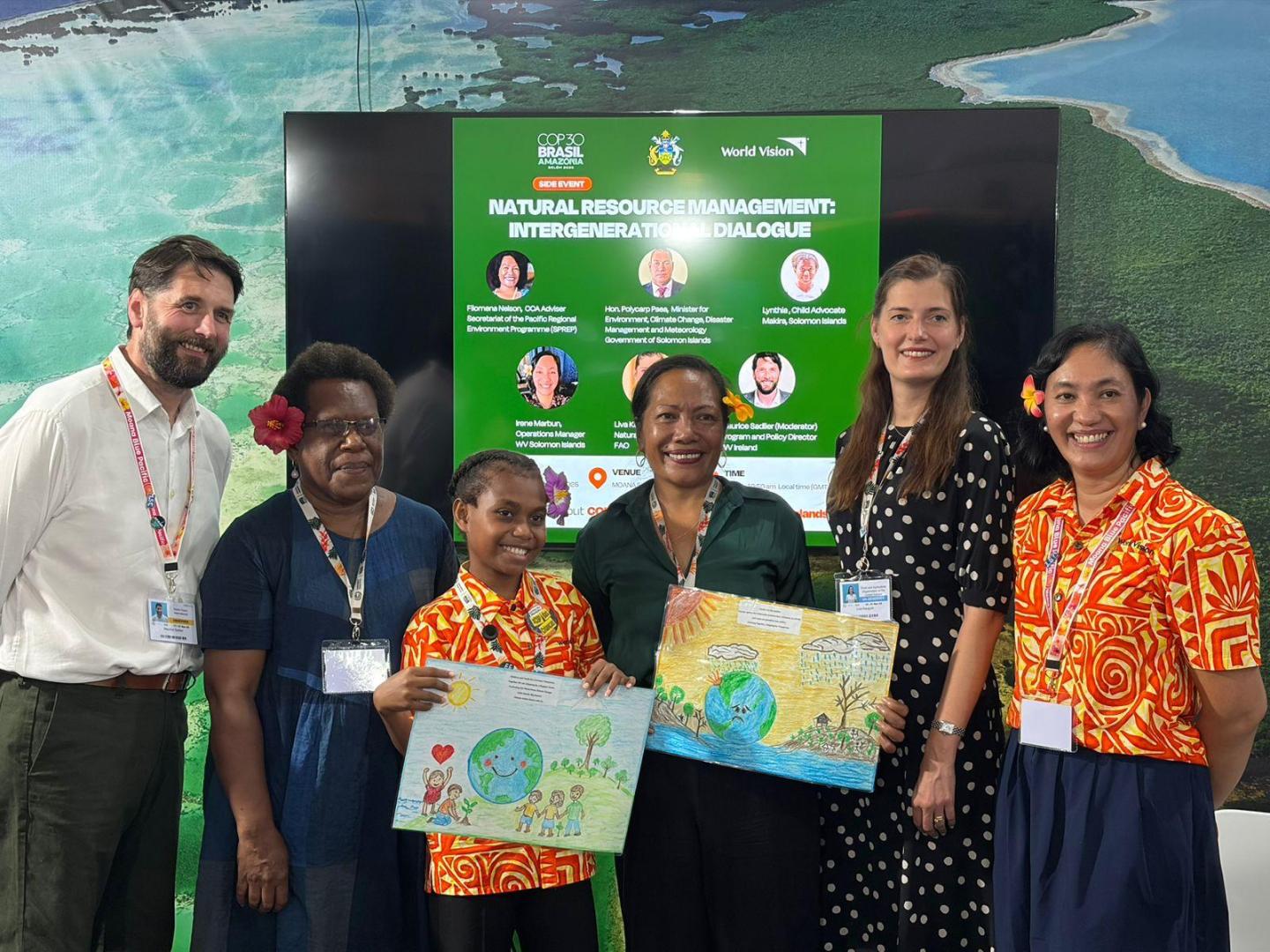
Lynthia with the World Vision delegation after a presentation at COP30 / Brazil. 2025.
The then Solomon Islands Minister for Environment, Climate Change, Disaster Management and Meteorology, Polycarp Paea, could easily have joined the panel. Instead, he chose to sit in the audience and listen. Afterwards, he invited Lynthia to continue the conversation over lunch.
That decision has stayed with me because it revealed something increasingly absent from international processes: listening as an act of leadership.
Listening is a governance function
The timing could not be more significant. As governments negotiate increasingly constrained development budgets while climate impacts accelerate, every investment must deliver greater legitimacy alongside greater effectiveness.
Children already bear a disproportionate share of climate-related risks. Nearly half of the world's children, or 1.1 billion children, are exposed to at least three overlapping climate and environmental hazards. Meanwhile, the World Bank projects that climate change could push up to 132 million more people into poverty by 2030 without stronger action. These are not abstract projections. They shape childhoods today.
And yet, the voices of those most directly affected remain largely absent from policymaking processes. Minister Paea captured this responsibility clearly:
They cannot be spectators. They need to be involved actively. They need to have a say. Their voice needs to be integrated into decisions that are achieved at all public meetings.
His words point towards a different understanding of participation. Listening is not courtesy. It is governance.
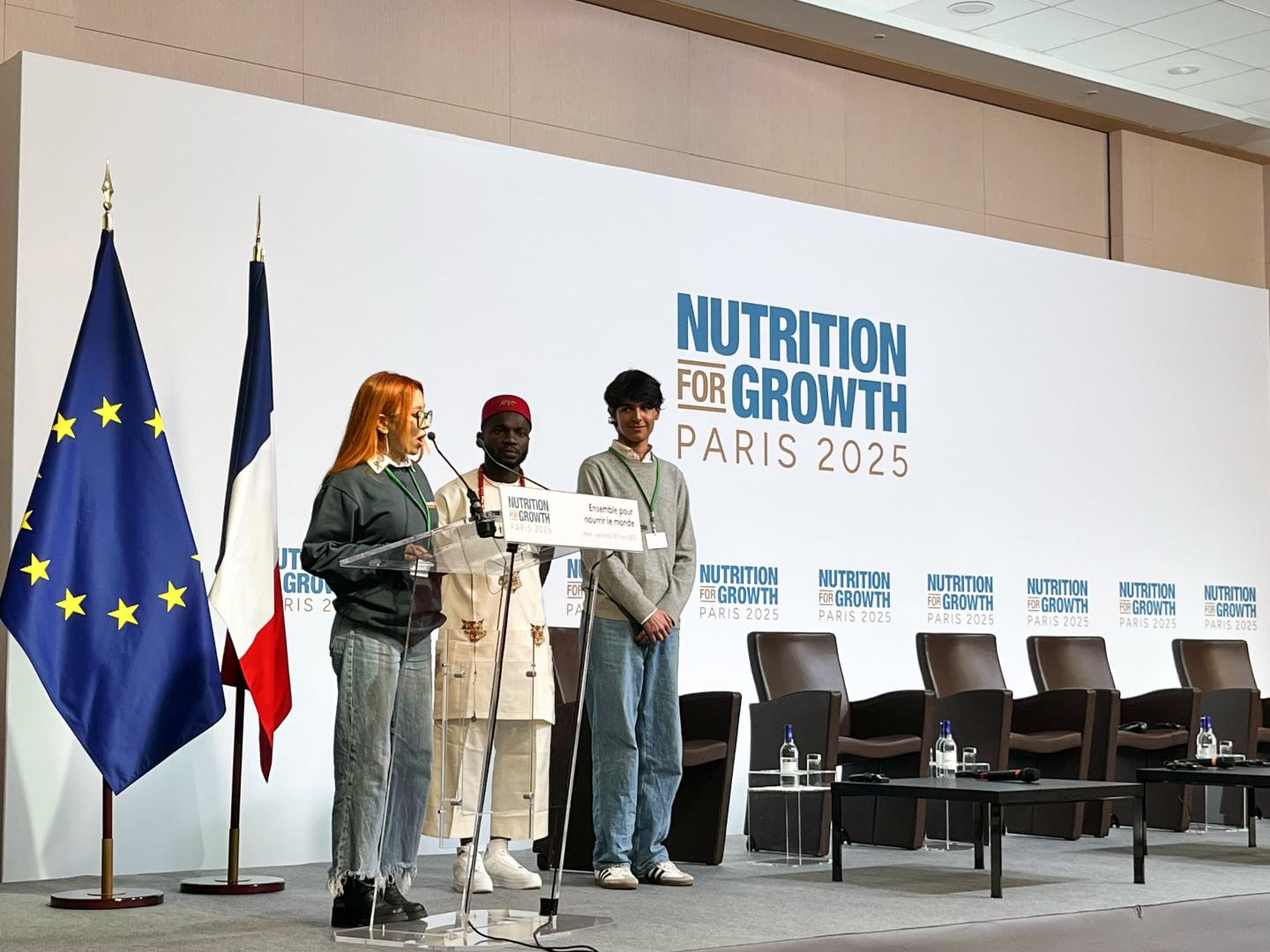
Youth advocates addressing delegates at the Nutrition for Growth Summit 2025 / Paris / 2025.
The next measure of leadership
Meaningful engagement requires more than creating opportunities for children to be heard. It requires a genuine willingness to consider their perspectives, explain how those perspectives have informed decisions, and be accountable for the outcomes.
That is why I continue to think about the Minister sitting in the audience.
By choosing to listen first, Minister Paea demonstrated a different kind of leadership. He created space for young people to share their perspectives and signalled that their experiences deserved attention. In doing so, he highlighted an essential truth: participation is a shared responsibility. It depends not only on children and young people having the confidence and opportunity to speak, but also on decision-makers being prepared to listen, engage, and respond.
As we shape the next generation of climate and development commitments, we need more leaders willing to embrace that responsibility. In the end, leadership will be measured not by how many children are invited into the room, but by whether their perspectives influence the decisions that follow.