
“I'm glad we have access to water. I come here to draw water and play with my friends. It makes me very happy. My prayer is that those who also need this help will get it,”
Moke
Just a few months ago, Moke described a scene of devastation following the floods in his village: "Before, water and mud filled the courtyard. We all stayed at home because there was no school." The floods had washed everything away: houses, latrines, and even his school in Kahengele, where he was in third grade.
Today, the 10-year-old's smile lights up the new water point in Nyemba. Behind him is the infrastructure that has changed the daily lives of more than 1,000 households, one of the pillars of the Childhood Rescue project in this area of the Democratic Republic of Congo (DRC), which is plagued by insecurity and cholera epidemics.
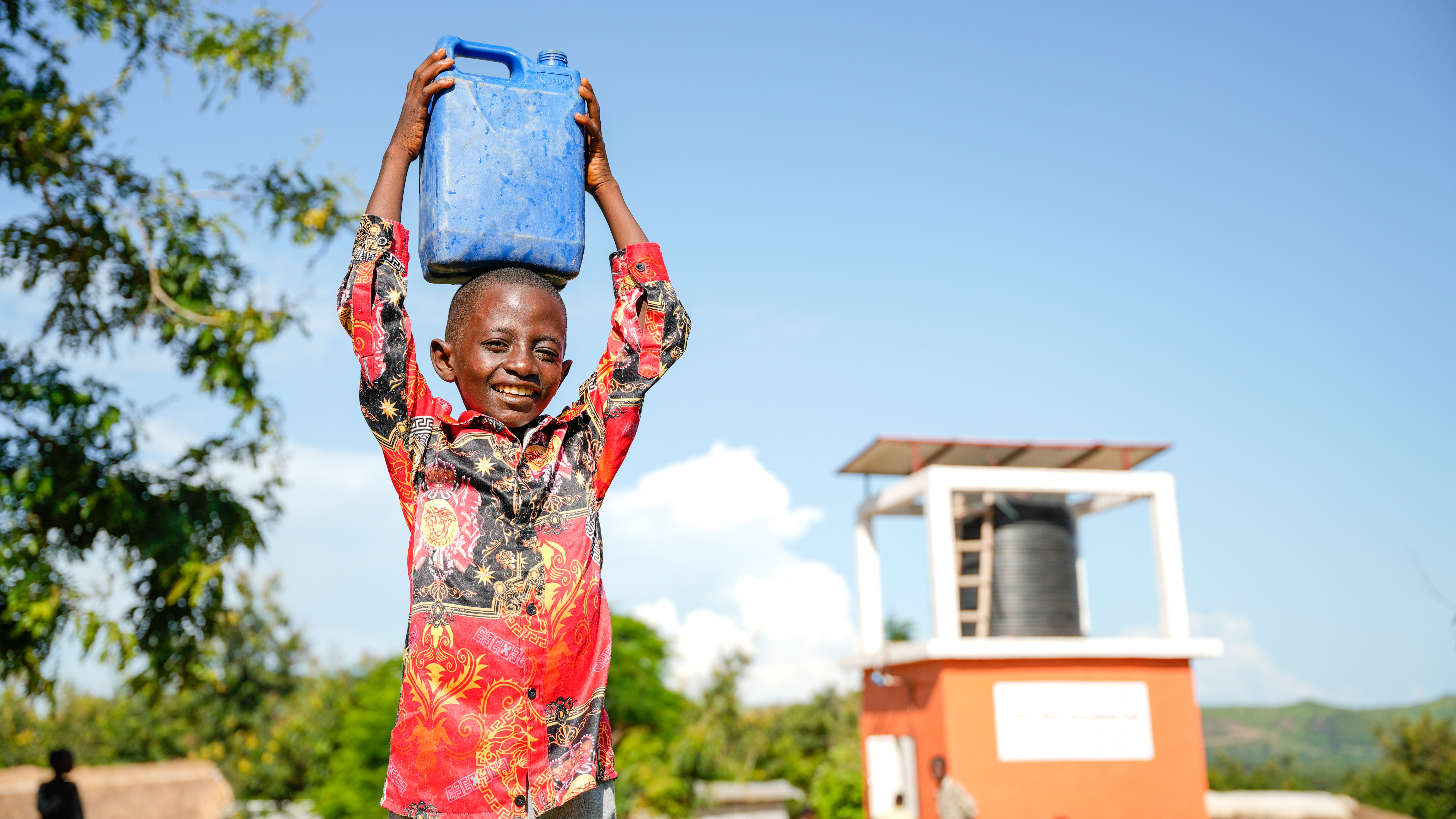
For Moke, the transformation is simple but profound. Water, once a source of problems (flooding, mud, school closures), has become a source of life and joy. The time lost in long journeys is now spent playing with his friends near the water point. But the impact goes beyond play. His grandmother is one of 750 people in 30 savings and credit groups supported by the project. Each group received €1020 (a total of €30,600) to launch income-generating activities. This economic inclusion of families creates a virtuous circle: financial security stabilises the household and protects Moke's childhood.
The project, designed to build resilience to conflict and disasters, has had to adapt to the region's complex realities, including recurring health crises. In Nyemba, the response has focused on sustainable solutions: access to clean water and economic empowerment. Moke's simple prayer is that other communities affected by flooding in the region may experience the same transformation. From a child who witnessed destruction, he has become a symbol of rebirth, where water no longer means loss, but the future.